

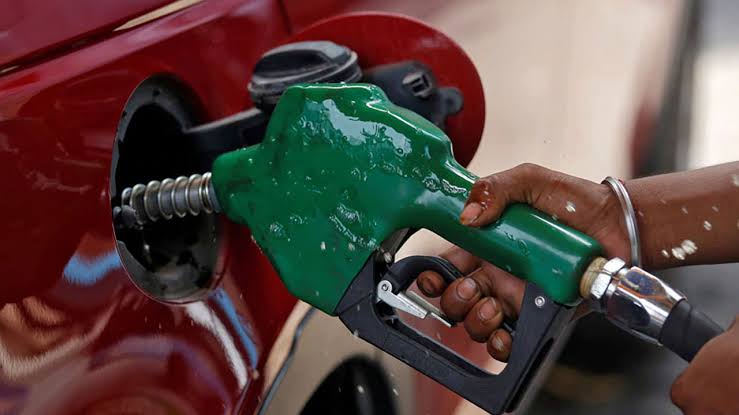
The Federal Government, on Monday, responded to widespread speculations about the reintroduction of the petrol subsidy, asserting that it remains discontinued.
The denial comes amid the closure of numerous filling stations across the country, contributing to concerns about fuel shortages. In a statement, the government clarified that the challenges faced in the downstream oil sector, leading to the closure of filling stations, are not indicative of a lack of supply but rather stem from hiccups in product distribution from the South to the North.
Furthermore, the Nigerian National Petroleum Company Limited (NNPCL) addressed the issue, emphasizing that if it weren’t for the decision made by President Bola Tinubu to halt the subsidy on Premium Motor Spirit (PMS) in May, the company would have faced bankruptcy as early as June this year.
The removal of the subsidy, part of a broader economic strategy, was aimed at redirecting funds into critical areas such as public infrastructure, education, healthcare, and job creation.
The Group Chief Executive Officer of NNPCL, Mele Kyari, clarified that there is no subsidy in the current pricing structure. He stated, “We are recovering our full cost from the products that we import. We sell to the market, and we understand why the marketers are unable to import. We hope that they do it very quickly, and these are some of the interventions the government is doing. There is no subsidy.”
Despite these assertions, there have been conflicting reports, with some oil marketers and industry associations suggesting the return of fuel subsidies. The landing cost of petrol was reported to be as high as N720 per litre, while the selling price ranged from N580 to N617 per litre.
Mele Kyari acknowledged the challenges faced in the distribution network, leading to sporadic fuel queues observed in certain states. He attributed these challenges to blockades on the road, causing delays in transporting products from Southern depots to the Northern part of the country. However, he assured the public that these issues have been addressed, and there is no cause for concern regarding the availability of fuel.
Furthermore, Kyari stated that Nigeria is on track to become a net exporter of refined petroleum products by the next year, a significant shift from the country’s longstanding practice of importing PMS and other refined products. Efforts are underway to revamp Nigeria’s refineries and achieve self-sufficiency in petroleum product production.
As the government navigates these challenges, there are ongoing discussions about addressing forex-related issues affecting oil marketers. The fluctuation in exchange rates has been a concern, impacting the ability to import petrol into Nigeria.
The government’s denial of reinstating the petrol subsidy is part of a broader narrative around economic reforms and efforts to position Nigeria as a net exporter of refined petroleum products. The complex interplay of factors, including distribution challenges, forex issues, and the broader economic strategy, underscores the intricacies of managing the country’s energy sector.