

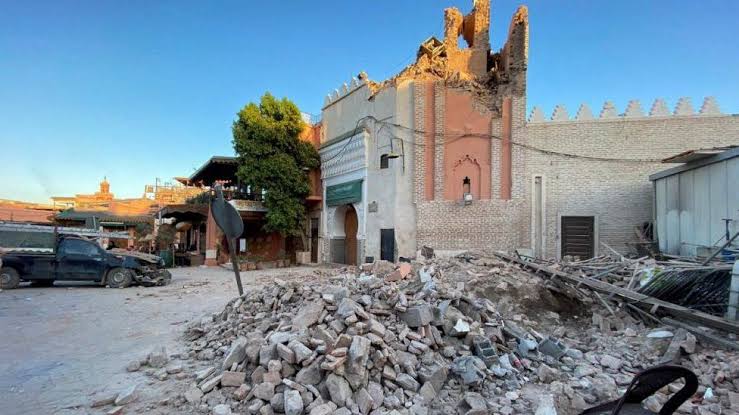
A powerful earthquake has struck Morocco, resulting in a devastating loss of more than 600 lives. This seismic event left residents in a state of terror, forcing them to flee their homes in the middle of the night.
The earthquake, measuring 6.8 on the Richter scale, occurred in a mountainous area located 72 kilometers (45 miles) southwest of Marrakesh, a popular tourist destination. The US Geological Survey reported that it struck at precisely 11:11 pm (2211 GMT) on Friday.
The impact of this earthquake was not limited to the epicenter; strong tremors were felt in coastal cities such as Rabat, Casablanca, and Essaouira. Reports from Moroccan media outlets suggest that this is the most powerful earthquake to have ever hit the country.
Witnesses on the ground described their experiences during the earthquake as deeply unsettling. Abdelhak El Amrani, 33, recounted how he felt a violent tremor and saw buildings moving in Marrakesh.
Panic and shock gripped the city’s residents, with children crying and parents distraught. The power and telephone network experienced temporary outages, compelling many to remain outside for safety.
The latest figures from the interior ministry confirm a tragic death toll of 632 people, with more than half of them in the Al-Haouz and Taroudant provinces. Additional casualties were recorded in Ouarzazate, Chichaoua, Azilal, and Youssoufia provinces, as well as in Marrakesh, Agadir, and the Casablanca area. Furthermore, 329 individuals sustained injuries, with 51 of them in critical condition, according to the ministry’s report.
Residents and witnesses describe the earthquake as a terrifying and unforgettable experience. Faisal Baddour, an engineer, mentioned feeling the earthquake three times in his building, and many families chose to sleep outside due to their fear of aftershocks. The impact was likened to a passing train, with the force of the earthquake shaking houses.
The aftermath of the earthquake revealed scenes of chaos and devastation in Marrakesh’s old town. Piles of rubble from collapsed walls were visible in the streets, and a minaret partially collapsed in Jemaa el-Fna Square, a historic city landmark.
Hundreds of people sought refuge in the square, opting to spend the night outdoors due to concerns about further tremors.
This disaster has prompted authorities to mobilize all necessary resources for immediate assistance, including the regional blood transfusion center in Marrakesh, which appealed for blood donations.
Reports from Al-Haouz, near the epicenter, indicate that a family was trapped in the rubble when their house collapsed.
The US Geological Survey’s PAGER system issued a “red alert” for extensive economic losses, highlighting the probability of widespread damage and the need for a substantial response.
This earthquake, with its catastrophic consequences, is a stark reminder of the importance of preparedness and resilience in the face of such natural disasters. It joins a history of seismic events in the region, underlining the critical need for ongoing vigilance and readiness.